
Essential Rules for Playing Setback Card Game
Essential Rules for Playing the Setback Card Game
So, your friends just pulled out a deck of cards for a game called ‘Setback’ and you’ve never heard of it. Don’t panic. This is a fast, social, and surprisingly simple game to pick up. In the next five minutes, you’ll know exactly how to play, from preparing the deck to winning your first points. To find more, check on uniworldcongress.org
First, gather your materials. The good news is, you likely already have everything.
- A standard 52-card deck
- Four players
- Pen and paper for scoring
Before you do anything else, you need to create a “stripped deck” for the Setback card game. Go through your standard deck and remove all the 2s, 3s, 4s, 5s, 6s, 7s, and 8s. You should be left with only the 9s, 10s, Jacks, Queens, Kings, and Aces—a total of 32 cards. Note: some variations keep the 2s in and remove the 9s, so confirm with your group!
Next, arrange the players. The ideal setup for how many people can play Setback is four, divided into two teams. Your partner is the person sitting directly across the table from you. This fixed partnership is key, as you’ll be working together to outsmart the other team. With your deck ready and teams formed, you’re ready to learn how to deal.
The Ultimate Goal: How Do You Win the Game?
Winning Setback is refreshingly simple: be the first player or team to reach a total of 7 points. That’s the magic number. You aren’t trying to get rid of your cards first or match complicated sets; you are in a straightforward race to score points. The first team to hit 7 (or more) at the end of a round wins the entire game.
Of course, you don’t get all those points at once. The game is broken down into smaller rounds, which are called hands. Think of a hand as one full cycle of dealing, playing, and scoring. In every single hand, there are exactly 4 points available for teams to capture. By winning these points hand after hand, you’ll build your score and march toward victory.
Step 1: How to Deal the Cards Correctly
To get started, one player takes on the role of dealer for the first hand. The dealing process for Setback is specific and easy to remember. After shuffling the 32-card deck, the dealer gives a batch of three cards to each player, starting with the person to their left and moving clockwise. Once everyone has three cards, the dealer goes around the table a second time, giving each player another batch of three. This leaves all four players with a six-card hand.
You’ll quickly notice there are eight cards left over after the deal. This isn’t a mistake! These extra cards are simply placed face-down on the table to form a “kitty.” They are out of play for the current hand, and no one is allowed to look at them. This little bit of mystery is part of what makes the card game fun for beginners and experts alike.
After the hand is played and scored, the job of the dealer simply passes one person to the left for the next round. This rotation continues for the entire game, ensuring everyone gets a turn. With the cards dealt, you’re ready for the first strategic decision of the hand: the bid.
Step 2: How to Bid and Name the Trump Suit
With six cards in your hand, the first real action of the game begins: the bid. A bid is simply a promise of how many points you believe your team can win in the upcoming hand. Looking at your cards, you’ll make a calculated guess. You can bid “two,” “three,” or “four,” or you can “pass” if your hand doesn’t look strong enough. This bidding phase, also called an auction, determines who gets a powerful advantage.
The process starts with the player to the dealer’s left and moves clockwise around the table. The first player can either bid “two” (the minimum) or pass. The next player must then either bid higher than the previous bid or pass. For example, if the person before you bids “two,” your only options are to bid “three,” “four,” or pass. This continues until one player has made a bid that no one else is willing to beat.
The reward for winning the bid is significant: you get to choose the trump suit. Think of trump as the “power suit” for that hand. After you win the auction, you announce which suit—Spades, Hearts, Diamonds, or Clubs—will be trump. For the rest of the hand, any card from your chosen trump suit will beat any card from the other three suits.
Once a player wins the bid and declares the trump suit, the auction is over. That player has made a contract; if they bid “three,” their team must now capture at least 3 points during the hand to be successful. Choosing the right trump suit is the key to fulfilling that contract.
What is a “Trump Suit” and Why Is It So Powerful?
So, you’ve won the bid and named a suit—what does that actually do? The suit you chose is now the trump suit, which is essentially a power-up for the entire hand. If you declared that Hearts are trump, then every Heart card is now stronger than any card from the other three suits (Spades, Clubs, or Diamonds). Those non-trump suits are often called off-suits.
This power is absolute and is a key part of trick-taking card game basics like Setback. Even the lowest-ranking trump card will beat the highest-ranking card of any off-suit. For example, if Hearts are trump, a lowly 9 of Hearts will win a fight against a mighty Ace of Spades. This simple rule completely changes how you value the cards in your hand.
Now you can see why winning the bid is such a game-changer. It lets you look at the cards you were dealt and choose the suit where you are strongest to be the power suit for everyone. This gives your team a massive advantage, making it much easier to control the game and capture the point cards you need to make your bid.
Step 3: How to Play a “Trick” and Follow Suit
With the trump suit set, the real action begins. The game is played in a series of tricks. Think of a trick as one mini-round where each of the four players plays a single card. The person who won the bid starts the game by leading a trick—placing the first card face-up in the center of the table.
The single most important rule in trick-taking card game basics is: you must follow suit. This simply means that if you have a card in your hand that matches the suit of the card that was led, you must play it. For instance, if the first player leads with a Spade, every other player must also play a Spade if they have one. Getting this wrong is one of the most common Setback mistakes to avoid, so always check your hand carefully.
What if you don’t have a card of the suit that was led? Only when you cannot follow suit are you free to play any card you want. This is your golden opportunity to play a powerful trump card to steal the trick from your opponents, or to discard a card from another suit that you don’t need.
Once all four players have played a card, the trick is over. The player who played the highest card of the suit that was led wins the trick—unless a trump card was played. In that case, the highest trump card wins. The winner collects the four cards and sets them aside, then leads the next trick. Winning tricks is the first step, but the real goal is capturing what’s inside them.
The 4 Point-Winning Cards You Absolutely Must Capture
Winning tricks is fun, but the real goal is to capture the specific cards that are worth points. Simply winning the most tricks doesn’t guarantee you’ll score. In every hand of Setback, there are exactly four points up for grabs, and your team’s job is to snatch as many of them as possible. Understanding the rules for Setback scoring and points is what separates beginners from seasoned players.
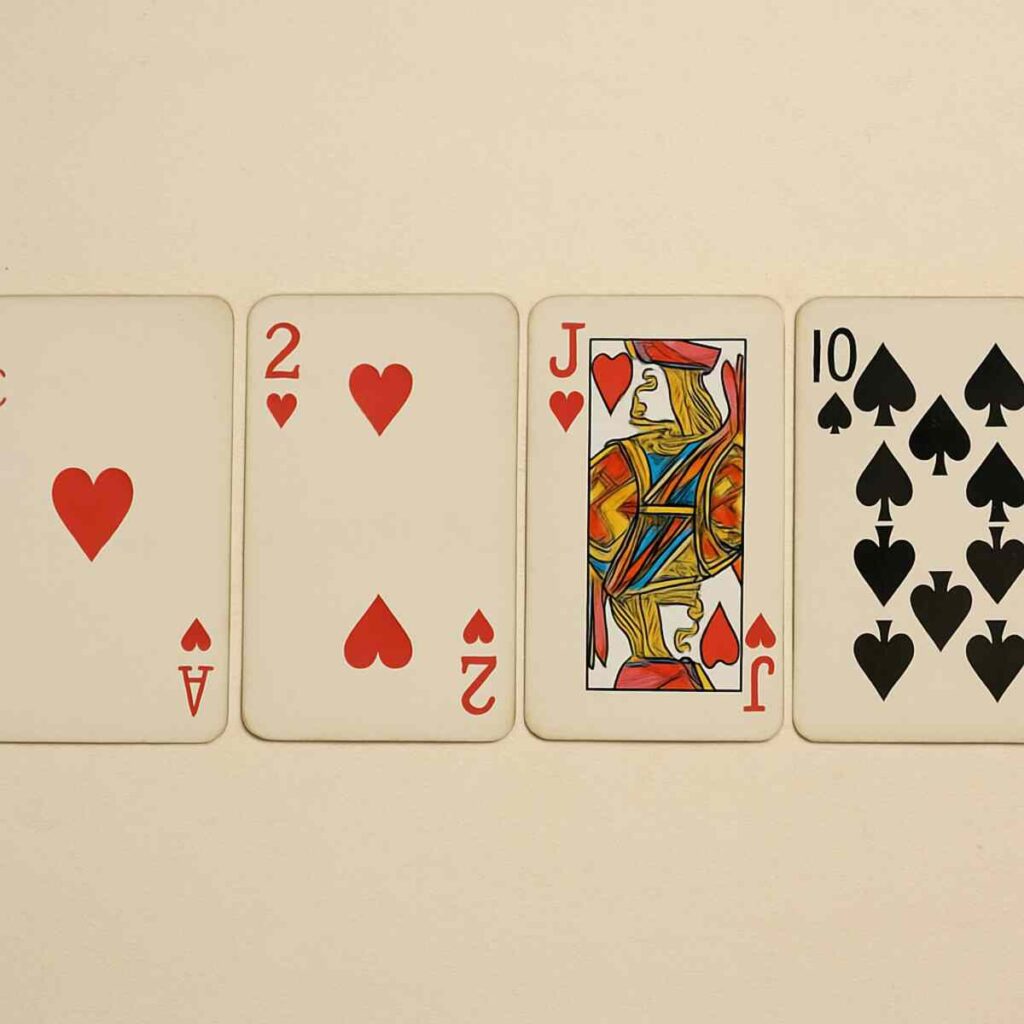
These four points are known as High, Low, Jack, and Game. It’s helpful to think of them not as individual cards, but as titles awarded at the end of the hand.
- 1. High: For capturing the highest trump card played in the hand.
- 2. Low: For being dealt the lowest trump card played in the hand.
- 3. Jack: For capturing the Jack of the trump suit.
- 4. Game: For having the highest total of “game points” from the cards your team collected.
How to Score the “High” and “Low” Points
The High point is awarded to the player who captures the highest-ranking trump card that was played during the hand. If Hearts are trump and your team wins the trick containing the Ace of Hearts, you’ve locked in that point. It doesn’t matter which player originally held the card, only which team captured it in a trick.
The Low point has a special twist and is a source of many common Setback mistakes. This point automatically goes to the player who was dealt the lowest trump card at the very start of the hand. You get the point simply for having the card in your hand when the deal is done.
Think of it this way: if Spades are trump and you were dealt the Nine of Spades, that “Low” point is already yours before you even play a single card. Even if an opponent wins the trick where you eventually play that Nine, the point still belongs to you and your team. This unique rule for Setback scoring and points is crucial to remember.
How to Capture the Valuable “Jack” Point
Unlike the ‘Low’ point, which is about what you were dealt, the point for Jack is all about what you win during play. This point goes to the team that successfully captures the Jack of the trump suit. It’s a straightforward hunt: whoever wins the trick containing that specific Jack earns the point. Knowing what the trump suit is in Setback is key, as only the Jack from that specific suit matters.
This creates some exciting moments. For instance, imagine Diamonds are trump. An opponent plays the Jack of Diamonds, but your partner wins that same trick with the Ace of Diamonds. Even though your opponent played the point card, your team captured the trick, so the “Jack” point goes on your side of the scoreboard. Remembering this is one of the most important setback card game strategy tips for new players.
But what if no one was dealt the Jack of trump? In that case, the point simply isn’t available for that hand. After tallying the high, low, and jack game points, there’s only one more category to account for: “Game.”
How to Count “Game” Points to Win the Hand
The final point available in each hand is for Game. It’s awarded to the team that collects the most overall card points in the tricks they’ve won. Think of it as a battle for the most valuable cards in the deck.
The setback scoring and points are straightforward. Only five cards matter for the Game count:
- 10s = 10 points each
- Aces = 4 points each
- Kings = 3 points each
- Queens = 2 points each
- Jacks = 1 point each
Once the hand is over, each team gathers the tricks they’ve won and adds up the values of the point cards they captured. For instance, if your team’s pile of captured cards contains a 10, an Ace, and a King, your “Game” total is 17 points (10 + 4 + 3). Your opponents then do the same count for their cards.
After both teams have their totals, the team with the higher number wins one single point for ‘Game.’ If there’s a tie in the count, neither team gets the point. With all four points decided, it’s time to tally the final score.
Step 4: How to Tally Your Score (and Avoid Being “Set Back”)
With the hand complete and the four points (High, Low, Jack, and Game) awarded, it’s time to update the scoreboard. First, simply count how many of those four points your team won. If you captured High and Game, your team earned two points for the hand. This initial tally is the easy part; now you have to see if the bidding team gets to keep them.
This is where the bid comes back into play. If your team won the bid, you must check if the number of points you just earned is equal to or greater than your bid. For example, if you bid “three” and your team successfully captured High, Low, and Jack (for 3 points total), you made your bid! Your team’s score goes up by 3. As long as you meet your bid, you score everything you earn.
However, failing to meet your bid means you get “set back.” This means your team scores zero for the hand. Even worse, your total score on the scoreboard is reduced by the amount you bid. So, if you bid “three” but only captured two points, your team’s score actually goes down by three. This penalty is why setback bidding rules explained are so important—bidding too high is one of the most common setback mistakes to avoid.
The opposing team’s score is much simpler. The team that did not win the bid always gets to add whatever points they earned to their score, no strings attached.
What if Everyone Passes or There’s a “Smudge”?
Occasionally, a hand comes around where no one feels confident enough to make a bid. If the bidding goes around the table and every single player passes, the hand is simply “passed in.” The cards are collected, shuffled, and the deal moves to the next player in rotation. No points are scored, and you just start the process over with a fresh hand.
On the complete opposite end of cautious passing is the boldest move in the game: bidding “Four” and aiming for a “Smudge.” Also known as “Shooting the Moon,” a Smudge is a special, high-risk, high-reward play. To achieve it, a player must not only win the bid with “Four” but also lead their team to capture all four points—High, Low, Jack, and Game—in that single hand.
Pulling off this impressive feat has a massive payoff. Instead of just scoring 4 points, the team that successfully smudges instantly wins the entire game, regardless of the current score. However, this is a popular but optional rule, making it a key part of any good guide to Setback variations. Because it can end a game so abruptly, it’s crucial to make sure everyone at the table agrees to play with the “Smudge” rule before the first hand is dealt.
Setback vs. Pitch: What’s the Real Difference?
If you’ve heard the names Setback and Pitch used interchangeably, you’re not alone. The confusion is understandable because they are both part of the same historic All Fours card game family. Think of them as very close cousins who share the same core goal: winning tricks to capture points for specific cards. Any game where you’re trying to win points for the highest and lowest trump, the Jack, and the “Game” total has its roots in All Fours.
The biggest fork in the road between the two games is how the trump suit gets decided. In Setback, players bid a number (from two to four) representing how many points they think they can capture. The winner of that bid then names the trump suit. In many common versions of Pitch, the process is more direct. Players might bid on which suit they want to make trump, or the first card played (the “pitch”) automatically sets the trump for that hand.
From there, the differences often come down to local traditions. You might find variations in how many cards are dealt, whether the dealer is forced to bid, or how the high low jack game points are tallied. While Setback is a specific version with a well-defined bidding and scoring structure (including the signature “set back” penalty), Pitch is often used as a broader term for the game family itself. So, while you’re playing a game of Setback, you’re also playing a type of Pitch.
A Quick-Reference Guide for Your First Game
You now have the essential rules to confidently play Setback. You’re no longer just watching from the sidelines; you’re ready to be part of the action.
To help you through your first few hands, here is a quick cheat sheet—your complete setback rules summary. Keep it nearby as a guide.
- Goal: Be the first player or team to reach 7 points.
- Hand Flow: Deal → Bid → Play Tricks → Score.
- The 4 Points: High (highest trump played), Low (lowest trump dealt), Jack (capture the trump Jack), Game (highest card point total).
- Scoring: Made your bid? Keep all the points you earned. Missed it? You get “Set Back” and lose the number of points you bid.
The best way to learn how to play the Setback card game is by doing. Don’t worry about advanced strategy or making mistakes. Your only goal for your first game is to deal the cards, try to win a few tricks with point cards in them, and have fun. The rest will click into place as you play. Now, it’s your deal.